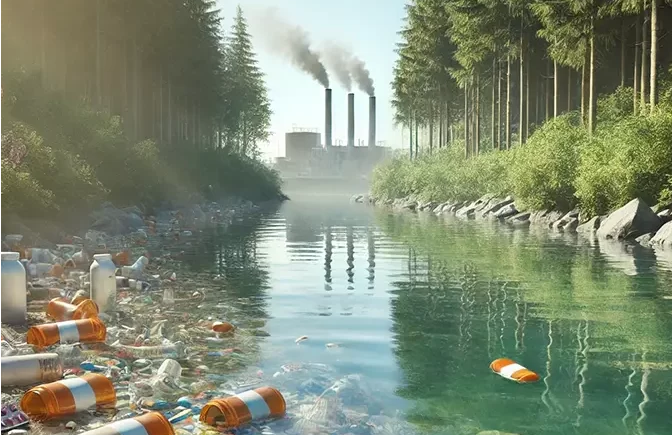
Innovation Allocation Dilemma: AI, R&D, and Policy Effects on U.S. Renewable Electricity
Downloads
Despite holding the world's second-largest portfolio of green technology patents, the U.S. is still behind the developed economies in energy efficiency outcomes, which is responsible for creating an innovation allocation dilemma in renewable electricity deployment. This study addresses the fundamental question of the optimal resource allocation among competing innovation pathways by investigating the comparative impacts of artificial intelligence (AI) innovation, green technology innovation (GTI), research and development (R&D) expenditures, and environmental policy stringency (EPS) have on the U.S. renewable electricity contribution rate (ECR) over a period of 33 years (1990-2022). Applying the autoregressive distributed lag (ARDL) model, this study highlights the fact that the interaction between R&D investment and per capita gross domestic product (GDP) significantly influences ECR with a long-term elasticity of about 91%. Second, EPS also has a highly significant and robust elasticity of about 62% for ECR gains. AI innovation, however, shows mixed effects: the initial positive short-run contributions fade away in the long run without sustained complementary investments. With respect to asymmetric effects, negative shocks convey larger benefits to renewable energy than positive ones, a finding that questions the conventional technology deployment. The findings support policymakers making R&D investments a priority over patent-based strategies, reallocating government expenditures from direct spending to market mechanisms.
Downloads
[1] WPR. (2025). Patents by Country 2025. World Population Review (WPR), California, United States. Available online: https://worldpopulationreview.com/country-rankings/patents-by-country (accessed on May 2026).
[2] U.S Department of Energy. (2024). Inflation Reduction Act of 2022. U.S Department of Energy, Washington, D.C., United States. Available online: https://www.energy.gov/lpo/inflation-reduction-act-2022 (accessed on May 2026).
[3] Iqbal, W., Tang, Y. M., Lijun, M., Chau, K. Y., Xuan, W., & Fatima, A. (2021). Energy policy paradox on environmental performance: The moderating role of renewable energy patents. Journal of Environmental Management, 297, 113230. doi:10.1016/j.jenvman.2021.113230.
[4] Olbrich, S., Bauknecht, D., & Späth, P. (2024). Policy mixes for net-zero energy transitions: Insights from energy sector integration in Germany. Energy Research and Social Science, 118, 103822. doi:10.1016/j.erss.2024.103822.
[5] Trager, R. (2025). US federal basic research support would fall 34% under Trump proposal. Chemistry World, Royal Society of Chemistry, London, United Kingdom. Available online: https://www.chemistryworld.com/news/federal-funding-for-basic-research-would-fall-to-levels-not-seen-since-1990s-under-trump-proposal/4021857.article (accessed on May 2026).
[6] Khosrojerdi, F., Akhigbe, O., Gagnon, S., Ramirez, A., & Richards, G. (2022). Integrating artificial intelligence and analytics in smart grids: a systematic literature review. International Journal of Energy Sector Management, 16(2), 318–338. doi:10.1108/IJESM-06-2020-0011.
[7] Ukoba, K., Olatunji, K. O., Adeoye, E., Jen, T. C., & Madyira, D. M. (2024). Optimizing renewable energy systems through artificial intelligence: Review and future prospects. Energy and Environment, 35(7), 3833-3879. doi:10.1177/0958305X241256293.
[8] Rajaperumal, T. A., & Columbus, C. C. (2025). Transforming the electrical grid: the role of AI in advancing smart, sustainable, and secure energy systems. Energy Informatics, 8(1), 51. doi:10.1186/s42162-024-00461-w.
[9] Zhou, W., Zhuang, Y., & Chen, Y. (2024). How does artificial intelligence affect pollutant emissions by improving energy efficiency and developing green technology. Energy Economics, 131, 107355. doi:10.1016/j.eneco.2024.107355.
[10] Bashir, M. F., Rao, A., Sharif, A., Ghosh, S., & Pan, Y. (2024). How do fiscal policies, energy consumption and environmental stringency impact energy transition in the G7 economies: Policy implications for the COP28. Journal of Cleaner Production, 434, 140367. doi:10.1016/j.jclepro.2023.140367.
[11] Bouquet, P., Jackson, I., Nick, M., & Kaboli, A. (2024). AI-based forecasting for optimised solar energy management and smart grid efficiency. International Journal of Production Research, 62(13), 4623–4644. doi:10.1080/00207543.2023.2269565.
[12] Olawumi, M. A., & Oladapo, B. I. (2025). AI-driven predictive models for sustainability. Journal of Environmental Management, 373, 123472. doi:10.1016/j.jenvman.2024.123472.
[13] Algburi, S., Sabeeh Abed Al Kareem, S., Sapaev, I. B., Mukhitdinov, O., Hassan, Q., Khalaf, D. H., & Jabbar, F. I. (2025). The role of artificial intelligence in accelerating renewable energy adoption for global energy transformation. Unconventional Resources, 8, 100229. doi:10.1016/j.uncres.2025.100229.
[14] Mose Solar. (2025). AI-Powered Solar PV Systems Boost Energy Output by 25%. Mose Solar Manufacturing. Available online: https://www.moserbaersolar.com/energy-storage-and-efficiency/innovation-and-advanced-technologies/ai-powered-solar-pv-systems-boost-energy-output-by-25/ (accessed on May 2026).
[15] U.S. Department of Energy. (2025). Artificial Intelligence: Transforming the Energy Landscape. U.S Department of Energy, Washington, D.C., United States. Available online: https://www.energy.gov/topics/artificial-intelligence (accessed on May 2026).
[16] Popkova, E. G., & Sergi, B. S. (2024). Energy infrastructure: Investment, sustainability and AI. Resources Policy, 91, 104807. doi:10.1016/j.resourpol.2024.104807.
[17] Carley, S., Baldwin, E., MacLean, L. M., & Brass, J. N. (2017). Global Expansion of Renewable Energy Generation: An Analysis of Policy Instruments. Environmental and Resource Economics, 68(2), 397–440. doi:10.1007/s10640-016-0025-3.
[18] Chen, H., Shi, Y., & Zhao, X. (2022). Investment in renewable energy resources, sustainable financial inclusion and energy efficiency: A case of US economy. Resources Policy, 77, 102680. doi:10.1016/j.resourpol.2022.102680.
[19] Song, T., Li, H., & Feng, Z. (2024). Policy and market mechanisms for promoting sustainable energy transition: role of government and private sector. Economic Change and Restructuring, 57(4), 153. doi:10.1007/s10644-024-09734-6.
[20] Zhao, Q., Wang, L., Stan, S. E., & Mirza, N. (2024). Can artificial intelligence help accelerate the transition to renewable energy? Energy Economics, 134, 107584. doi:10.1016/j.eneco.2024.107584.
[21] Liu, Y., Guo, J., Shen, F., & Song, Y. (2025). Can artificial intelligence technology improve green total factor efficiency in energy utilisation? Empirical evidence from 282 cities in China. Economic Change and Restructuring, 58(2), 23. doi:10.1007/s10644-025-09862-7.
[22] Chen, B., Xiong, R., Li, H., Sun, Q., & Yang, J. (2019). Pathways for sustainable energy transition. Journal of Cleaner Production, 228, 1564–1571. doi:10.1016/j.jclepro.2019.04.372.
[23] Rikkonen, P., Lauttamäki, V., Parkkinen, M., Varho, V., & Tapio, P. (2021). Five transition pathways to renewable energy futures—scenarios from a Delphi study on key drivers and policy options. European Journal of Futures Research, 9(1), 14. doi:10.1186/s40309-021-00185-0.
[24] Chu, Z., Zhang, Z., Tan, W., & Chen, P. (2024). Revolutionizing energy practices: Unleashing the power of artificial intelligence in corporate energy transition. Journal of Environmental Management, 357, 120806. doi:10.1016/j.jenvman.2024.120806.
[25] Alam, M. B., & Hossain, M. S. (2024). Investigating the connections between China’s economic growth, use of renewable energy, and research and development concerning CO2 emissions: An ARDL Bound Test Approach. Technological Forecasting and Social Change, 201, 123220. doi:10.1016/j.techfore.2024.123220.
[26] Bozatli, O., & Akca, H. (2024). Effectiveness of environmental protection expenditures and resource tax policy in the Netherland’s load capacity factor: Do government effectiveness and renewable energy matter? Evidence from Fourier augmented ARDL. Resources Policy, 92, 105030. doi:10.1016/j.resourpol.2024.105030.
[27] Taher, H. (2024). The Impact of Government Expenditure, Renewable Energy Consumption, and Co2 Emissions on Lebanese Economic Sustainability: ARDL Approach. Environmental Economics, 15(1), 217–227. doi:10.21511/ee.15(1).2024.16.
[28] Bresnahan, T. (2024). What innovation paths for AI to become a GPT? Journal of Economics and Management Strategy, 33(2), 305–316. doi:10.1111/jems.12524.
[29] Romer, P. M. (1990). Endogenous technological change. Journal of Political Economy, 98(5), S71–S102. doi:10.3386/w3210.
[30] Freeman, C. (1995). The “national system of innovation” in historical perspective. Cambridge Journal of Economics, 19(1), 5–24. doi:10.1093/oxfordjournals.cje.a035309.
[31] Hori, T. (2020). Monetary Policy, Financial Frictions, and Heterogeneous R&D Firms in an Endogenous Growth Model*. Scandinavian Journal of Economics, 122(4), 1343–1373. doi:10.1111/sjoe.12387.
[32] Li, X., Li, S., Cao, J., & Spulbar, A. C. (2025). Does artificial intelligence improve energy efficiency? Evidence from provincial data in China. Energy Economics, 142, 108149. doi:10.1016/j.eneco.2024.108149.
[33] Lundvall, B. Å., Johnson, B., Andersen, E. S., & Dalum, B. (2002). National systems of production, innovation and competence building. Research Policy, 31(2), 213–231. doi:10.1016/S0048-7333(01)00137-8.
[34] Yuwono, B., Kranzl, L., Haas, R., Dewi, R. G., Siagian, U. W. R., Kraxner, F., & Yowargana, P. (2025). Incorporating grid development in capacity expansion optimisation - A case study for Indonesia. Applied Energy, 378, 124837. doi:10.1016/j.apenergy.2024.124837.
[35] Nekrasov, S. A. (2021). Reducing Costs for Integration of Renewable Energy Sources: A Way to Making Renewable Energy More Accessible. Thermal Engineering, 68(8), 593–603. doi:10.1134/S0040601521070077.
[36] Kozlova, M., & Overland, I. (2022). Combining capacity mechanisms and renewable energy support: A review of the international experience. Renewable and Sustainable Energy Reviews, 155, 111878. doi:10.1016/j.rser.2021.111878.
[37] Keskar, A., & Jain, S. (2022). Advanced AI-ML Techniques for Predictive Maintenance and Process Automation in Manufacturing Systems. International Journal of Innovative Research in Computer and Communication Engineering, 10(01), 1-15. doi:10.15680/ijircce.2022.1001001.
[38] Hassan, Q., Viktor, P., J. Al-Musawi, T., Mahmood Ali, B., Algburi, S., Alzoubi, H. M., Khudhair Al-Jiboory, A., Zuhair Sameen, A., Salman, H. M., & Jaszczur, M. (2024). The renewable energy role in the global energy Transformations. Renewable Energy Focus, 48, 100545. doi:10.1016/j.ref.2024.100545.
[39] Bai, R., Lin, B., & Liu, X. (2021). Government subsidies and firm-level renewable energy investment: New evidence from partially linear functional-coefficient models. Energy Policy, 159, 112610. doi:10.1016/j.enpol.2021.112610.
[40] Boza, P., & Evgeniou, T. (2021). Artificial intelligence to support the integration of variable renewable energy sources to the power system. Applied Energy, 290, 116754. doi:10.1016/j.apenergy.2021.116754.
[41] Lee, T. (2021). Financial investment for the development of renewable energy capacity. Energy and Environment, 32(6), 1103–1116. doi:10.1177/0958305X19882403.
[42] Liu, W., Shen, Y., & Razzaq, A. (2023). How renewable energy investment, environmental regulations, and financial development derive renewable energy transition: Evidence from G7 countries. Renewable Energy, 206, 1188–1197. doi:10.1016/j.renene.2023.02.017.
[43] Azam, A., Rafiq, M., Shafique, M., Ateeq, M., & Yuan, J. (2021). Investigating the impact of renewable electricity consumption on sustainable economic development: a panel ARDL approach. International Journal of Green Energy, 18(11), 1185–1192. doi:10.1080/15435075.2021.1897825.
[44] Somoye, O. A., Ozdeser, H., & Seraj, M. (2022). The impact of renewable energy consumption on economic growth in Nigeria: fresh evidence from a non-linear ARDL approach. Environmental Science and Pollution Research, 29(41), 62611–62625. doi:10.1007/s11356-022-20110-7.
[45] Rao, B. N., Praveen, M., & Babu, D. R. (2024). A review on the role of AI in optimizing renewable energy grid management. Interantional Journal of Scientific Research in Engineering and Management, 8(11), 1-13. doi:10.55041/IJSREM38884.
[46] Caglar, A. E., & Ulug, M. (2022). The role of government spending on energy efficiency R&D budgets in the green transformation process: insight from the top-five countries. Environmental Science and Pollution Research, 29(50), 76472–76484. doi:10.1007/s11356-022-21133-w.
[47] Dahmani, M. (2024). Environmental quality and sustainability: exploring the role of environmental taxes, environment-related technologies, and R&D expenditure. Environmental Economics and Policy Studies, 26(2), 449–477. doi:10.1007/s10018-023-00387-9.
[48] Bölük, G., & Kaplan, R. (2022). Effectiveness of renewable energy incentives on sustainability: evidence from dynamic panel data analysis for the EU countries and Turkey. Environmental Science and Pollution Research, 29(18), 26613–26630. doi:10.1007/s11356-021-17801-y.
[49] Shahzad, U., Radulescu, M., Rahim, S., Isik, C., Yousaf, Z., & Ionescu, S. A. (2021). Do environment-related policy instruments and technologies facilitate renewable energy generation? Exploring the contextual evidence from developed economies. Energies, 14(3), 690. doi:10.3390/en14030690.
[50] Xie, B., & Xie, B. (2024). Assessing the impact of climate policy on energy security in developed economies. International Review of Economics and Finance, 90, 265–282. doi:10.1016/j.iref.2023.11.006.
[51] Dong, Z., Zhou, Z., Ananzeh, M., Hoang, K. N., Shamansurova, Z., & Luong, T. A. (2024). Exploring the asymmetric association between fintech, clean energy, climate policy, natural resource conservations and environmental quality. A post-COVID perspective from Asian countries. Resources Policy, 88, 104489. doi:10.1016/j.resourpol.2023.104489.
[52] Ziesemer, T. H. W. (2025). Evidence on an endogenous growth model with public R&D. Economics of Innovation and New Technology, 34(4), 536–572. doi:10.1080/10438599.2024.2354426.
[53] Lin, B., & Wang, S. (2024). Sustainability of renewable energy in China: Enhanced strategic investment and displaced R&D expenditure. Energy Economics, 131, 107312. doi:10.1016/j.eneco.2024.107312.
[54] Esmaeilpour Moghadam, H., & Karami, A. (2024). Green innovation: exploring the impact of environmental patents on the adoption and advancement of renewable energy. Management of Environmental Quality, 35(8), 1815–1835. doi:10.1108/MEQ-10-2023-0360.
[55] Sogut, Y., Degirmenci, T., & Aydin, M. (2025). Determinants of carbon footprint in the USA: The role of public energy technology R&D, energy security risk, renewable energy transition, and population density. Journal of Environmental Management, 392, 126803. doi:10.1016/j.jenvman.2025.126803.
[56] Ahmed, Z., Cary, M., Shahbaz, M., & Vo, X. V. (2021). Asymmetric nexus between economic policy uncertainty, renewable energy technology budgets, and environmental sustainability: Evidence from the United States. Journal of Cleaner Production, 313, 127723. doi:10.1016/j.jclepro.2021.127723.
[57] Dickey, D. A., & Fuller, W. A. (1979). Distribution of the Estimators for Autoregressive Time Series with a Unit Root. Journal of the American Statistical Association, 74(366), 427–431. doi:10.1080/01621459.1979.10482531.
[58] Phillips, P. C. B., & Perron, P. (1988). Testing for a unit root in time series regression. Biometrika, 75(2), 335–346. doi:10.1093/biomet/75.2.335.
[59] Pesaran, M. H., Shin, Y., & Smith, R. J. (2001). Bounds testing approaches to the analysis of level relationships. Journal of Applied Econometrics, 16(3), 289–326. doi:10.1002/jae.616.
[60] Shin, Y., Yu, B., & Greenwood-Nimmo, M. (2014). Modelling asymmetric cointegration and dynamic multipliers in a nonlinear ARDL framework. Festschrift in honor of Peter Schmidt: Econometric methods and applications. Springer, New York, United States. doi:10.1007/978-1-4899-8008-3_9.
[61] Cho, J. S., Greenwood-Nimmo, M., & Shin, Y. (2023). Recent developments of the autoregressive distributed lag modelling framework. Journal of Economic Surveys, 37(1), 7–32. doi:10.1111/joes.12450.
[62] Brown, R. L., Durbin, J., & Evans, J. M. (1975). Techniques for Testing the Constancy of Regression Relationships over Time. Journal of the Royal Statistical Society Series B: Statistical Methodology, 37(2), 149–163. doi:10.1111/j.2517-6161.1975.tb01532.x.
[63] Toda, H. Y., & Yamamoto, T. (1995). Statistical inference in vector auto regressions with possibly integrated processes. Journal of Econometrics, 66(1–2), 225–250. doi:10.1016/0304-4076(94)01616-8.
[64] Hair, J. F., Sarstedt, M., Hopkins, L., & Kuppelwieser, V. G. (2014). Partial least squares structural equation modeling (PLS-SEM): An emerging tool in business research. European Business Review, 26(2), 106–121. doi:10.1108/EBR-10-2013-0128.
[65] Corlett, W. J., & Aigner, D. J. (1972). Basic Econometrics. The Economic Journal. McGraw Hill, Ohio, United States. doi:10.2307/2230043.
[66] Fang, Y., Lee, C. C., & Li, X. (2025). Assessing the impact of artificial intelligence on the transition to renewable energy? Analysis of U.S. states under policy uncertainty. Renewable Energy, 246, 122969. doi:10.1016/j.renene.2025.122969.
[67] Hobbs, B. F., Zhang, J., Hamann, H. F., Siebenschuh, C., Zhang, R., Li, B., Krad, I., Krishnan, V., Spyrou, E., Wang, Y., Xu, Q., & Zhang, S. (2022). Using probabilistic solar power forecasts to inform flexible ramp product procurement for the California ISO. Solar Energy Advances, 2, 100024. doi:10.1016/j.seja.2022.100024.
[68] Deschenes, O., Malloy, C., & McDonald, G. (2023). Causal effects of Renewable Portfolio Standards on renewable investments and generation: The role of heterogeneity and dynamics. Resource and Energy Economics, 75, 101393. doi:10.1016/j.reseneeco.2023.101393.
[69] Haseeb, M., Hossain, M. E., Hossain, M. R., Rehman, M. Z., & Bekun, F. V. (2025). Do the United States' fiscal decentralization, money supply, and environmental policies promote the clean energy transition? M. Haseeb et al. Environment, Development and Sustainability, 1-34. doi:10.1007/s10668-025-06433-8.
[70] Tian, L., Li, X., Lee, C. W., & Spulbăr, C. (2024). Investigating the asymmetric impact of artificial intelligence on renewable energy under climate policy uncertainty. Energy Economics, 137, 107809. doi:10.1016/j.eneco.2024.107809.
[71] Wang, Q., Li, Y., & Li, R. (2025). Integrating artificial intelligence in energy transition: A comprehensive review. Energy Strategy Reviews, 57, 101600. doi:10.1016/j.esr.2024.101600.
[72] Rasheed, M. Q., Yuhuan, Z., Ahmed, Z., Haseeb, A., & Saud, S. (2024). Information communication technology, economic growth, natural resources, and renewable energy production: Evaluating the asymmetric and symmetric impacts of artificial intelligence in robotics and innovative economies. Journal of Cleaner Production, 447. doi:10.1016/j.jclepro.2024.141466.
[73] Osmani, F., & Salari, T. E. (2025). Asymmetric effects of financial and technological development on green energies: Evidence from solar, wind and renewable electricity with an emphasis on crisis conditions. Results in Engineering, 26, 105123. doi:10.1016/j.rineng.2025.105123.
[74] Damrich, S., Kealey, T., & Ricketts, M. (2022). Crowding in and crowding out within a contribution good model of research. Research Policy, 51(1), 104400. doi:10.1016/j.respol.2021.104400.
[75] Ezeife, E., Kokogho, E., Odio, P. E., & Adeyanju, M. O. (2021). The Future of Tax Technology in the United States: A Conceptual Framework for AI-Driven Tax Transformation. International Journal of Multidisciplinary Research and Growth Evaluation, 2(6), 542–551. doi:10.54660/.ijmrge.2021.2.1.542-551.
[76] ACEEE. (2014). The International Energy Efficiency Scorecard - Brazil. American Council for an Energy-Efficient Economy, American Council for an Energy-Efficiency Economy (ACEEE), Washington, D.C., United States. Available online: https://www.aceee.org/international-scorecard (accessed on May 2026).
[77] California Energy Commission. (2020). SB 100 Joint Agency Report. California Energy Commission, California, United States. Available online: https://www.energy.ca.gov/sb100 (accessed on May 2026).
[78] ISEP. (2025). 2024 Share of Electricity from Renewable Energy Resources in Japan [Preliminary Report]. Institute for Sustainable Energy Policies (ISEP), Shinjuku, Tokyo. Available online: https://www.isep.or.jp/en/1561/ (accessed on May 2026).
- The authors retain all copyrights. It is noticeable that authors will not be forced to sign any copyright transfer agreements.
- This work (including HTML and PDF Files) is licensed under a Creative Commons Attribution 4.0 International License.